
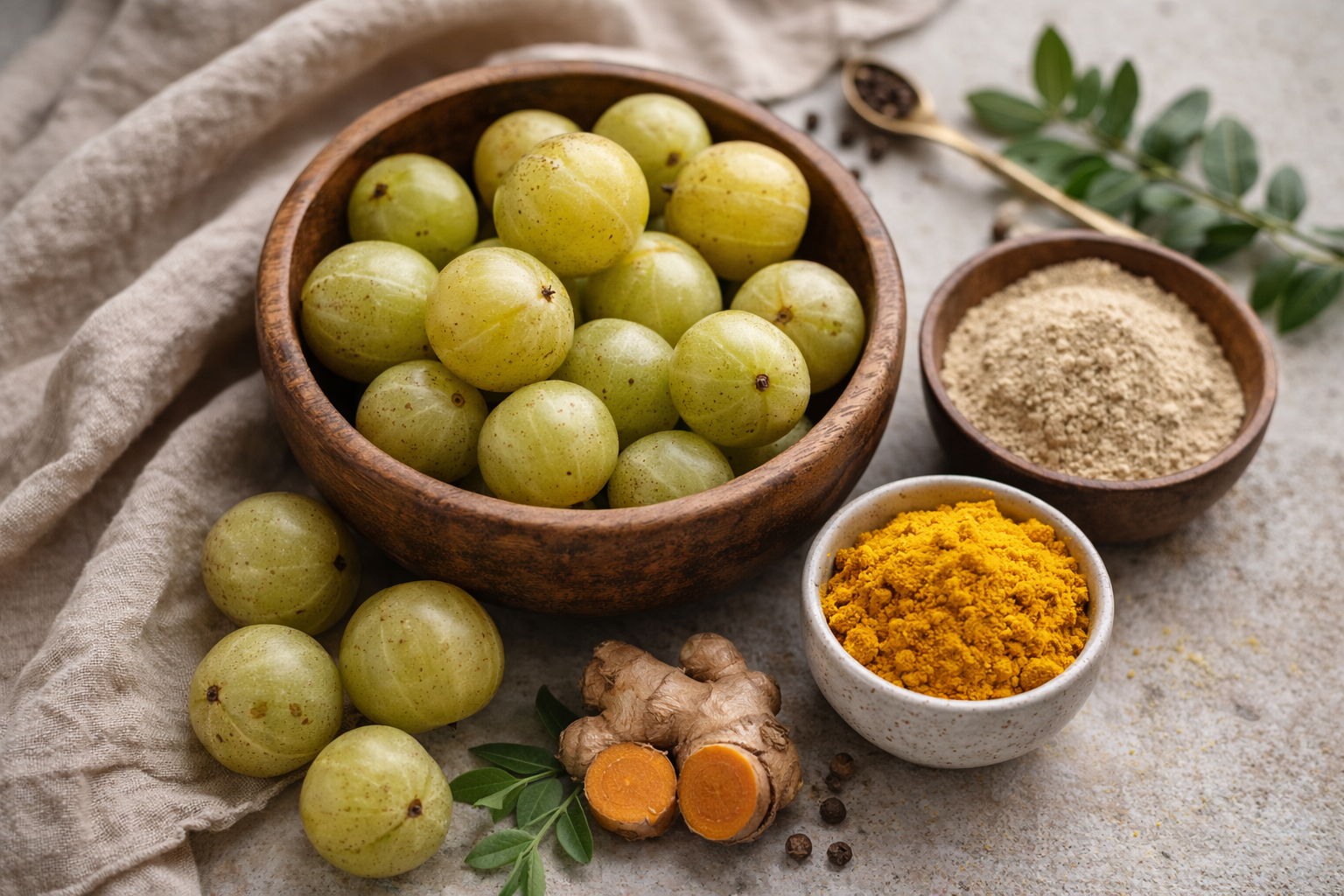
In Ayurveda, few fruits are as highly revered as Amalaki (Emblica officinalis), also known as Indian Gooseberry. This small, green, sour fruit packs a potent punch of nourishment, cleansing power, and longevity-promoting properties, making it one of the most valuable herbs in the Ayurvedic pharmacopeia. Whether you’re an herbalist tending a home apothecary or simply curious about incorporating more plant medicine into your kitchen, Amalaki is a versatile, powerful ally.
The Story of Amalaki: An Ancient Ally
Amalaki is considered the "mother" in Ayurvedic tradition, a caretaker and protector of the body, mind, and spirit. Its gentle yet powerful action supports immunity, digestion, and rejuvenation, making it one of the most important Rasayana (rejuvenative) herbs in Ayurvedic medicine.
In the classical Ayurvedic text Charaka Samhita, the sage Charaka writes, "Of all the Rasayanas, Amalaki is the best among rejuvenative herbs." Its therapeutic benefit of Vayastapana, meaning "to stop aging," has earned Amalaki a revered place in daily Ayurvedic practice. It is the main ingredient in many classic rejuvenative formulas, including Chyavanaprash, the well-known tonic for youth, vitality, and immune health.
Why Amalaki Shines in Fall and Winter
According to Ayurveda, fall and early winter are governed by Vata Dosha, which carries qualities such as cold, dry, rough, light, subtle, and mobile. These attributes can lead to instability in the body and mind, weakening immunity, digestion, and the nervous system.
If not properly balanced, excess Vata can disturb Pitta and Kapha as well, leading to deeper imbalances and accelerating the aging process. This is why prevention is the focus in Ayurveda, especially during seasonal transitions. Amalaki is a go-to remedy in this period because of its ability to nourish, ground, and rejuvenate, while also protecting the system from stress, inflammation, and depletion.
Ayurvedic Profile of Amalaki
Rasa (taste): Sour, sweet, astringent, bitter, and slightly pungent
Virya (action): Cooling
Vipaka (post-digestive effect): Sweet
This rare combination of five out of the six tastes makes Amalaki tridoshic, meaning it is balancing for all three Doshas:
Vata: Nourishes, grounds, and moistens with its sweet and sour qualities
Pitta: Cools inflammation and supports liver and blood health
Kapha: Astringency and mild pungency help to reduce dampness and stagnation
Healing Benefits of Amalaki
1. Immunity and Vitality
Amalaki is one of the richest natural sources of heat-stable Vitamin C, which plays a crucial role in enhancing immune response, tissue repair, and collagen production. It supports the body’s defense against seasonal colds and respiratory illness.
2. Anti-Aging and Rejuvenation
As a Rasayana, Amalaki supports tissue regeneration, elasticity, and strength. It nourishes all seven bodily tissues (dhatus), supporting graceful aging from the inside out.
3. Digestive and Metabolic Support
Unlike other sour fruits, Amalaki is cooling and doesn’t aggravate Pitta. It strengthens Agni (digestive fire), supports bile flow, improves elimination, and tones the gastrointestinal tract.
4. Liver Health and Detoxification
Amalaki gently detoxifies the liver, reduces oxidative stress, and aids in the removal of ama (toxins), while nourishing the blood and lymph.
5. Radiant Skin and Hair
Regular use promotes a clear complexion, strong nails, and glossy hair. Its astringent and antioxidant qualities make it an ally in skin healing, hair growth, and reducing premature greying.
6. Mood and Mental Resilience
Its nourishing action extends to the nervous system. Amalaki is known to calm mental restlessness, support emotional resilience, and enhance clarity of mind.
How to Use Amalaki in Daily Life
Amalaki can be taken in many forms: fresh fruit, dried powder, capsules, decoctions, or cooked into nourishing foods. Here are some home herbalist-friendly ways to incorporate Amalaki into your fall and winter routines:
1. Amalaki Tea (Simple Decoction)
Ingredients:
1 tsp Amalaki powder
2 cups water
Optional: pinch of cinnamon, ginger, or cardamom
Instructions: Boil Amalaki powder and optional spices in water for 5-10 minutes. Strain and sip warm, especially in the morning or between meals to support digestion and immunity.
2. Amalaki Honey Paste
Ingredients:
1 tsp Amalaki powder
1 tsp raw honey (local and unheated)
Instructions: Mix well and take in the morning on an empty stomach. This combination supports immune resilience, clarity of mind, and skin health. (Avoid heating the honey to preserve its medicinal qualities.)
3. Nourishing Amalaki Chyawan Jam (Simplified Chyavanaprash)
Ingredients:
2 tbsp Amalaki powder
1 tbsp ghee
1 tbsp honey
Pinch of cinnamon, cardamom, and black pepper
Instructions: Blend into a paste and take 1 tsp daily. A modern and simplified twist on the classic Chyavanaprash formula.
4. Amalaki Hair & Skin Mask
Ingredients:
1 tsp Amalaki powder
1 tsp aloe vera gel
1 tsp rose water
Instructions: Apply to clean skin or scalp, leave on for 15 minutes, and rinse. Supports glow, tone, and scalp health.
Considerations and Dosage
Typical dose: 1/2 to 1 tsp daily of Amalaki powder (consult an Ayurvedic practitioner for personalized use)
Best taken on an empty stomach, or between meals
For sensitive digestion, try combining with warm water and ginger
Avoid use during extreme cold without balancing herbs like cinnamon or ginger
Pair with Panchakarma for Deeper Rejuvenation
While Amalaki is a daily tonic, it becomes especially powerful when paired with Panchakarma, Ayurveda’s comprehensive detox and rejuvenation protocol. At Purusha Ayurveda, our winter and early spring Panchakarma retreats feature personalized formulations, including Rasayana herbs like Amalaki, tailored to your constitution and current imbalances.
Panchakarma clears what no longer serves, physically, mentally, emotionally, so Rasayana therapy like Amalaki can deeply nourish and rebuild. This is the perfect reset for the new year.
Panchakarma retreats include personalized herbal protocols, nourishing meals, and deeply restorative therapies designed to:
reset digestion and metabolism
calm the nervous system
clear accumulated ama (toxins)
prepare the body for true rejuvenation
For many guests, this combination creates the deep reset they have been seeking for years.
“An exceptional Panchakarma program — thoughtful, thorough, and profoundly rejuvenating.”
Disclaimer
The sole purpose of these articles is to provide information about the tradition of Ayurveda. This information is not intended for use in the diagnosis, treatment, cure or prevention of any disease.